
Key Takeaways
- The cylindrical metal mesh frame inside a filter cartridge is its load-bearing skeleton: it keeps pleated media in shape and prevents collapse under pressure differences.
- When that frame is built on separate stations, oval tubes, misaligned seams, burrs and weak welds are common — and they quietly eat into output.
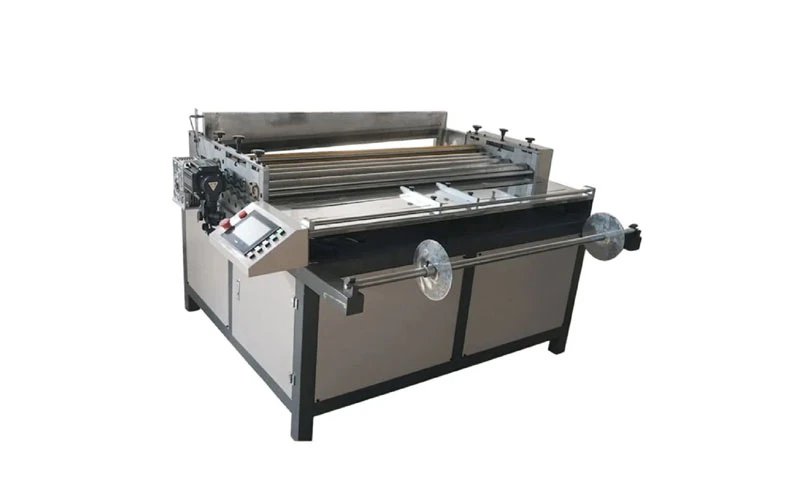
- An integrated flattening, cutting, rolling and welding machine runs the whole sequence in one pass, from coiled mesh to a finished cylindrical core.
- When comparing options, working width, mesh thickness range, cylinder diameter range, welding power and changeover speed matter most.
The Hidden Skeleton Inside Every Filter Cartridge
Open any cartridge filter — air, fuel, hydraulic or dust collector — and the pleated paper or fibrous media gets all the attention. Yet the media alone cannot hold its shape. As fluid passes through, a pressure difference builds across the element, and without support the fine media would stretch, sag, or collapse.
That support comes from a cylindrical metal mesh frame, often called the inner core or outer protective cage. It sits inside the pleats or around them, holding the media at its designed spacing and taking the mechanical load. A round, consistent frame lets the media pack evenly and seals properly against the end caps. A crooked frame does the opposite: the media caves in, flow channels narrow, and the cartridge fails early.
Making these frames looks simple — take a flat sheet of mesh, roll it into a tube, close the seam. In practice, that short chain hides most of the quality risk in a filter shop. This is where specialized filter machinery earns its place: equipment built to convert rolls of mesh into precise, welded cylindrical cores without the frame ever leaving the line. Such units live in the same corner of the workshop as levelers and slitting machines, but their job is the final forming and welding.
Why Frame Quality Falls Apart With Separate Stations
Many smaller shops still build frames the old way. A leveler straightens the coil, a shear cuts blanks, an operator rolls each blank around a mandrel by hand, and a spot welder closes the joint. Each step works on its own, but the handoffs between them create the problems that surface later in finished cartridges.
- Oval or tapered tubes. A hand-rolled blank rarely closes into a true circle, so the pleated media does not seat evenly.
- Misaligned seams. When the edges are not lined up before welding, the seam wanders along the cylinder wall.
- Burrs and torn edges. A skewed cut from an unleveled sheet leaves sharp edges that can nick the media.
- Inconsistent weld strength. Manual spot welding produces joints that vary with operator skill and timing.
- Low output and extra labor. Four stations mean four sets of handling, a waiting pile of work-in-progress, and more people on each shift.
None of these defects looks dramatic on its own. Together, they raise scrap rates, slow downstream assembly, and shorten the life of the cartridges a plant ships.
How an Integrated Four-in-One Machine Fixes It
An integrated flattening, cutting, rolling and welding machine attacks those handoffs directly. Instead of moving a half-finished frame from station to station, a coil of mesh feeds in one end and a welded cylinder comes out the other — with leveling, cutting, rolling and seam welding all on the same bed.
The process is short. Upper and lower hardened rollers level the mesh first, because coil memory and curvature would otherwise produce skewed blanks and oval tubes. The flattened sheet is then cut to the exact blank length, rolled around a former into a cylinder, and the overlapping seam passes through a resistance welder that closes it in one continuous pass. Where standalone rolling machines once needed a worker to position every blank, and separate welding machines called for a fresh jig on each diameter, the whole cycle now runs continuously. Once the recipe is set, two or three frames per minute is a realistic pace, and the operator stores cutting length, cylinder diameter and weld timing on a touchscreen for fast changeovers.
The benefit is not only speed. Because the mesh never touches a workbench between leveling and welding, every dimension stays tied to one machine alignment — the cut is always true to the flat sheet, and the seam always closes against the same round former. That consistency is what removes the oval tubes, wandering seams and burrs listed earlier.
What to Compare When You Buy One
Integrated units differ more than their brochures suggest. Compare these points side by side before shortlisting:
| Parameter | Why it matters |
| Working width | Must cover your widest coil and finished blank; too narrow and later frame sizes become impossible. |
| Mesh thickness range | Decides whether the machine handles light expanded mesh, woven wire, or heavier support structures. |
| Cylinder diameter range | Must cover your cartridge line — check both the smallest and largest practical diameters. |
| Welding power | Sets seam strength, and whether thin mesh burns through or heavy mesh stays unwelded. |
| Output speed | Frames per minute decide how many downstream pleating and assembly lines one machine can feed. |
| Control and changeover | Touchscreen recipe storage and quick fixture swaps decide how fast you move between products. |
Where These Integrated Lines Are Used
This class of machine appears wherever cylindrical mesh frames are produced in volume. Common settings include:
- Pleated air and fuel filter cartridges, where the frame forms the inner core and the outer protective mesh.
- HVAC panel filters and heavy-duty dust collector elements that need rigid metal supports.
- High-volume filter plants that want one automated cell instead of four manual stations.
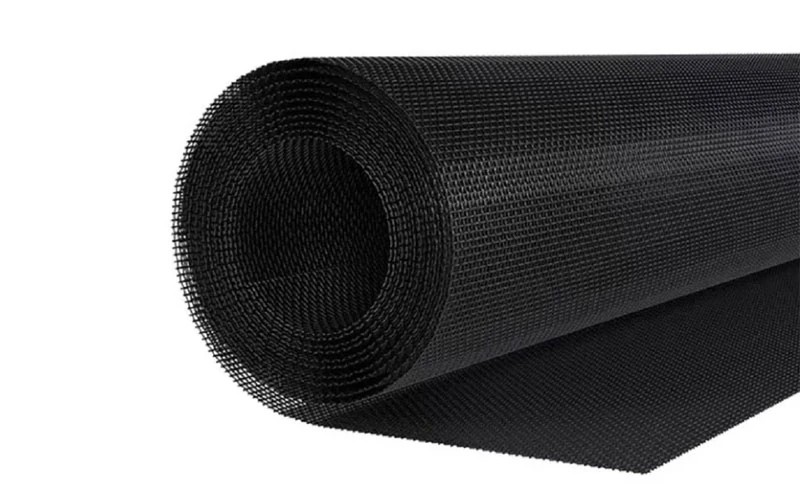
Most production runs on stainless steel filter mesh of moderate thickness, though lighter expanded metal meshes are also fed through for cost-sensitive protective cages. The material choice depends on the fluid, temperature and corrosion conditions the finished cartridge will see.
A Four-in-One Machine Built for Filter Frame Production
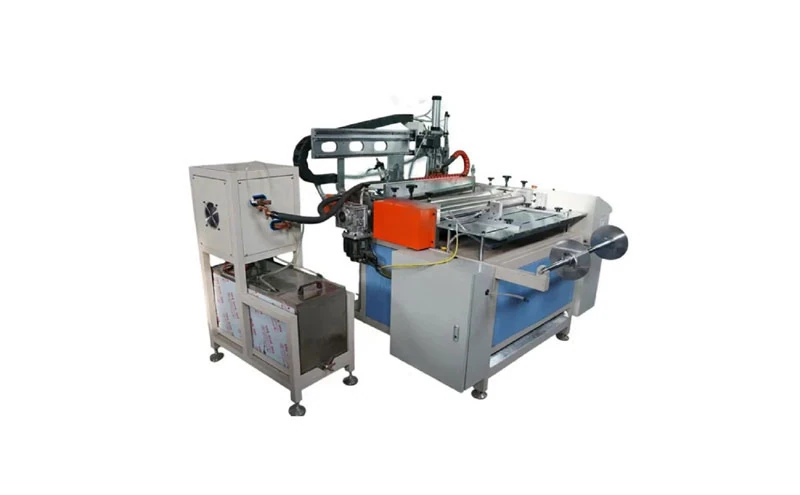
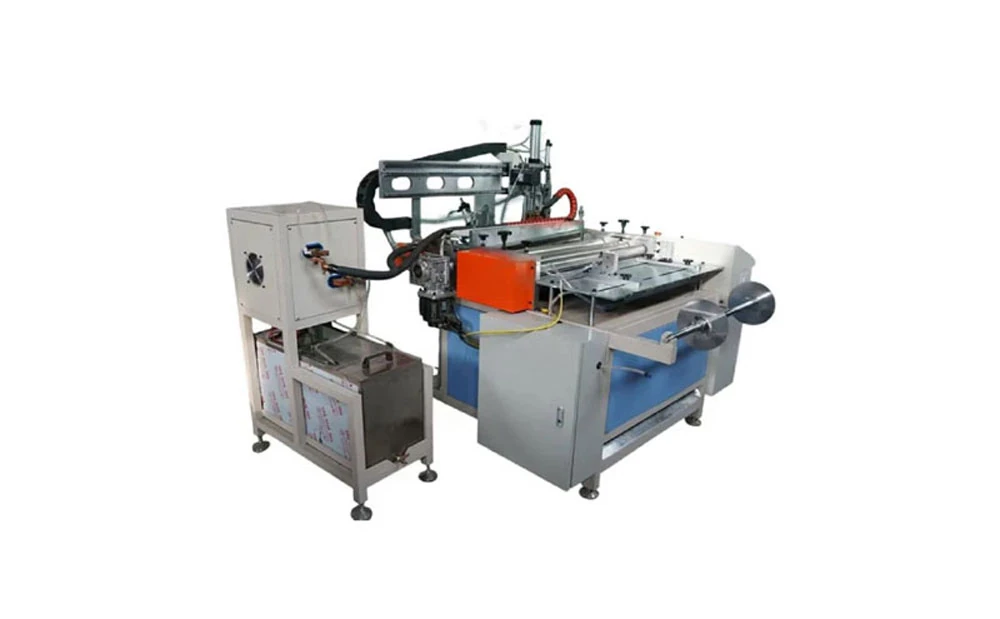
When a shop needs that integrated workflow in a real unit, one proven configuration covers the entire range — the Automatic Flattening, Cutting, Rolling & Welding Machine from Fupei, built specifically for cylindrical metal mesh support frames.
Built for a Continuous Workflow
The unit takes coiled mesh straight through leveling, cutting, rolling and welding, with no intermediate handling between steps. It covers a working width of 650 mm, mesh thickness of 0.4–0.8 mm, and cylinder diameters from 115 to 380 mm, at a steady 2–3 frames per minute depending on diameter and thickness. Working air pressure sits at 0.6 MPa, supported by a 4.5 kW main drive.
Welding Power and Control
A 40 kVA integrated resistance welding system closes the seam with consistent penetration, producing robust, leak-proof joints rather than a line of discrete spots. An industrial touchscreen HMI stores each recipe — cutting length, cylinder diameter and weld timing — so operators can switch between product sizes within minutes.
Customization and Support
Working width, mesh thickness, cylinder-diameter tooling and voltage configurations can be adjusted to a plant’s actual cartridge range. Every machine ships with a one-year warranty, full wiring diagrams, and remote video troubleshooting; on-site installation and operator training are available on request.
Frequently Asked Questions
What does an automatic flattening, cutting, rolling and welding machine produce?
It turns coiled metal mesh into finished cylindrical welded frames — the inner support cores and outer protective cages used inside air, fuel and industrial filter cartridges.
Why must filter support frames be perfectly round?
A round frame holds pleated media at its designed spacing and seals evenly against the end caps. An oval or tapered tube creates uneven media packing, narrows flow channels, and shortens cartridge life.
What is the difference between seam welding and spot welding for filter frames?
Spot welding makes discrete nuggets along the seam and stays flexible for complex shapes. Seam welding rolls a continuous, leak-proof joint and is preferred for regular cylinders where a strong, consistent seam matters.
What mesh thickness and cylinder diameter can these machines handle?
Typical units process metallic mesh around 0.4–0.8 mm thick and frame diameters from roughly 115 to 380 mm, with customization available for wider meshes or alternative diameter ranges.
Conclusion
Cylindrical mesh frames look like a small part inside a filter cartridge, but their roundness, edge quality and seam strength decide how long the whole cartridge survives. Building them on separate stations invites oval tubes, burrs and weak welds, while an integrated four-in-one machine runs the entire sequence in one pass and keeps every dimension tied to a single alignment. If you are setting up or upgrading a frame production line, compare your mesh width and cartridge diameters against the points above, and request a machine configured to your own product range.