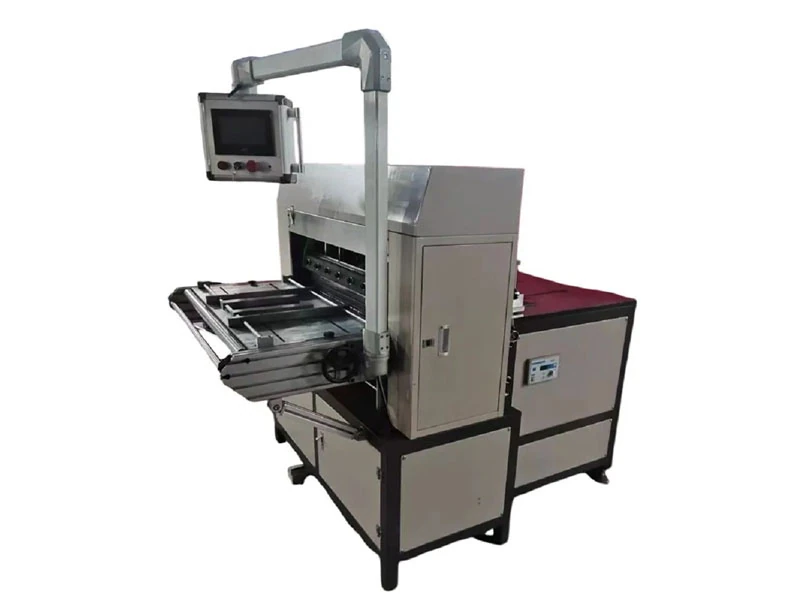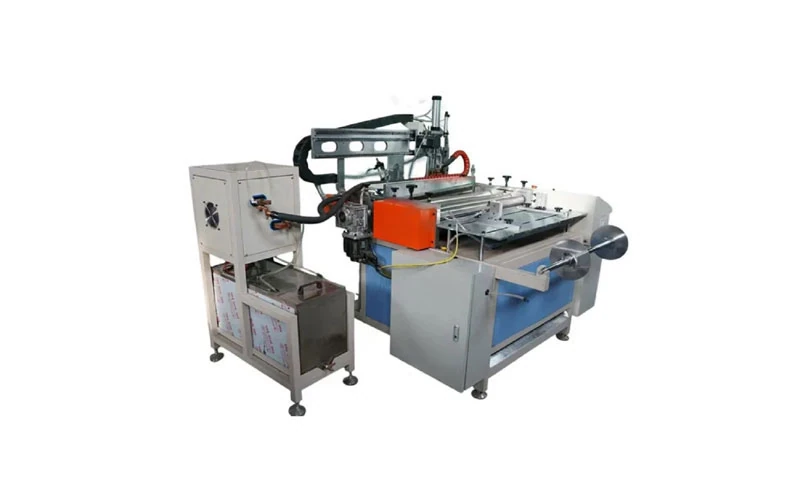

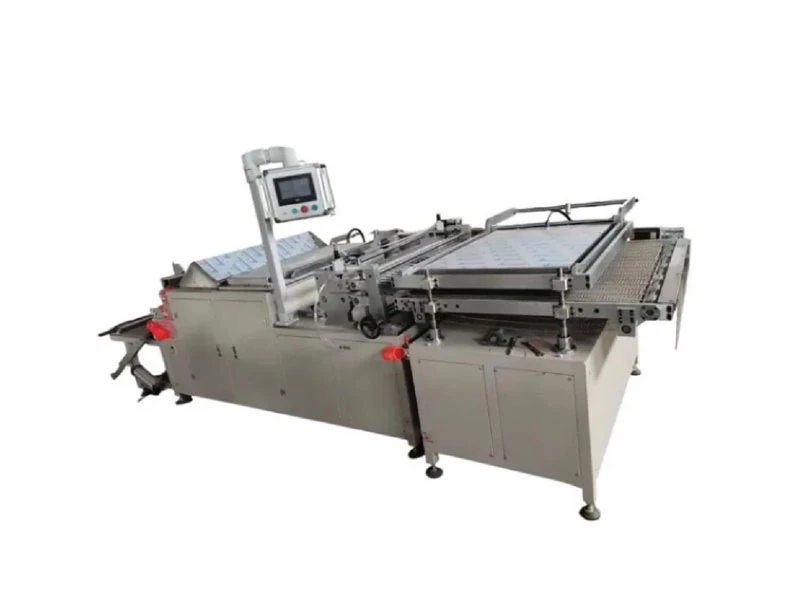
Three things go wrong on a pleating line more often than anything else. The pleat comes out shorter than the height the order calls for. Fold edges open between the rollers and the packing table. The gap between pleats drifts across the roll. None of them looks like a machine fault, yet the finished pack is not the pack that was ordered. Usually the fold was formed and never set.
Key Takeaways
- Most heavy-duty elements sit in the 30–75 mm pleat height band, and that height sets how much media fits in the housing. A fold that relaxes after forming quietly gives part of the area back.
- A rotary pleating machine can form deep pleats at production speed, yet forming is only half of the job.
- Thick non-woven and multi-layer media resist the crease, so they need moisture and controlled heat before a fold will stay where it was put.
- Pleat height, pitch, width and line speed are set as one group, because changing one changes what the other three can do.
What a Rotary Pleating Machine Does on a Heavy Air Filter Line
Strip away the cabinets and the screen, and a rotary pleating machine is a short sequence of mechanical actions. Nearly every quality problem traces back to one of them.
The Three Motions That Make a Pleat
A pleat is made by feeding, marking and forming. Feeding brings media off the roll at a controlled rate, marking presses a crease where the fold will sit, and forming pushes the web into a zig-zag.
Rotary machines run all three without stopping. Profiled rollers turn against the media and lay pleats in as the web passes, which keeps long runs economical. The same motion sets the limit: because the shape comes from the rollers, pleat geometry follows tooling rather than a setting on a screen.
What the Feeding Section and the Forming Rollers Each Control
The feeding section owns tension and alignment. Slack media drifts sideways before the first crease, so a pack built from a drifting web stays skewed whatever the rollers do. Media that arrives too tight stretches at the root, and a stretched root will not hold its angle.
The rollers own the profile. Their pitch sets pleat height, their surface sets the nose, and on most pleating machines the two arrive as a matched set for one height and one profile.
Why Heavy Air Filters Ask More of a Fold Than Panel Filters Do
A panel filter in a clean office air handler leads a gentle life. A heavy air filter on a quarry loader does not.
The Work the Media Has to Survive
The air reaching filters on construction and mining equipment carries silica, cement and plant debris. The element sits in a housing that vibrates all shift, and cleaning arrives as a reverse pulse of air that pushes the pack outward. That cycle repeats thousands of times between services. A pleat that was bent but never set opens a little more with every pulse.
Why Thick Media Fights Back at the Crease
Thick synthetic non-woven is nothing like light cellulose. Bending stiffness climbs steeply with thickness, so a heavy web fights the roller instead of following it. The crease it does take is held by the full depth of the material, not by a thin surface skin.
Multi-layer media adds a second problem. Layers bend at slightly different radii and slide against each other, so when the outer layer sets while the inner one moves, the pleat gets a soft nose and a hard shoulder. A panel pleat in light media at shallow height meets none of that resistance, so the same fold geometry is routine in one application and difficult in the other.
Four Settings That Decide the Quality of a Heavy-Duty Pleat
Four numbers shape everything else: pleat height, pitch, working width and line speed. Across filter machinery of this class, each limits the other three. They pull against each other, and each carries a cost at either end of its range:
| Pleat setting | What it controls | Typical value or how it is set | If set too low | If set too high |
| Pleat height | Media area per pack; dust holding capacity | 30–75 mm | Pack loads fast and service life drops | Root crowds, pleats close, pressure drop climbs |
| Pleat pitch | Open space between folds; airflow path | Set from pleat height and media thickness | Pleats touch and block flow | Housing holds less media than it could |
| Working width | Output per pass; edge trim per order | Matched to the widest element you build | More passes and more seams | Edge control and even heating get harder |
| Line speed | Output per hour; dwell time in heat | Set by pleat height and media weight | Heat and moisture act unevenly | Fold never reaches a full set |
Pleat Height and the Deep-Pleat Trade-Off
Height is a trade, not a target. A deeper pleat puts more media into the same housing, which lowers face velocity and raises dust holding capacity. A shallow pleat does the reverse.
The cost shows up at the root. A tall fold turns through a tighter angle over the same footprint, which makes the pack harder to keep open. Deep pleats also need more dwell time in any heating zone. Heavy air work sits mostly in the 30–75 mm band.
Pleat Pitch and How Tight You Can Run
Pitch is the distance from one fold to the next. Too tight and pleats touch, closing the flow path; too wide and the housing holds less media than it could. The usable minimum depends on how thick and how stiff the media is, because a stiff web can take a tighter pitch than a soft one before the folds close.
Working Width and Output per Pass
Width sets how much media goes through in one pass, and a wider line asks more of everything else: flatter media, better edge control, even heat.
Line Speed and What Actually Limits It
Speed sets output per hour, and it is never a single number. The rate a line holds at one pleat height is not the rate it holds at another, because folds per meter change with height and the media sets its own limit. A speed figure quoted without its pleat height tells a buyer very little.
Pleat Shape: Sharp, Square and the Two Bulge Folds
Height and pitch decide how much media goes into a pack. Shape decides what the air does inside.
What Each Shape Does to Airflow and Dust Release
The nose is where air meets the media first. A sharp nose splits the flow and sheds dust well. A square nose gives the fold a flat face that resists closing. A bulged nose, whether it swells outward or inward, keeps the widest gap away from the fold line, so neighboring pleats meet at a controlled place.
No shape is better in general. The wrong one makes a good machine look bad.
Matching Shape to Filter Type and Media Weight
Shape follows the element, the media and the cleaning method. Four patterns cover most heavy air work:
- Sharp pleat. Dry, high-dust duty such as quarry and farm intake. The pointed nose sheds dust and keeps a clean path for the air.
- Square pleat. Cylindrical and panel elements packed tightly or handled often; the flat nose resists compression and keeps the pack square.
- Outward bulge. Thick, springy media that would otherwise close on itself; the bulge holds a controlled gap between pleats.
- Inward bulge. Elements that must stay compact inside a narrow housing while still keeping spacing at the pleat tips.
Why Thick Media Needs Moisture and Heat, Not More Pressure
When a fold refuses to stay, the first instinct is to press harder. More pressure does sharpen the crease along the run, yet it damages the media. Fibers crack at the root, and the pleat opens on the customer’s machine.
What a Fold Does to the Fibers
Bending a web stores energy. Fibers outside the fold stretch, fibers inside compress, and the binder holds the difference. The angle survives only while the material is held in the folded position. Remove the force and that energy works the fold open.
Moisture Before the Crease
Moisture softens the web before it reaches the rollers. Fibers slide past each other, the surface layer stretches instead of cracking, and the fold forms at lower force, leaving less energy to release later. Too much moisture swells the web and lets the spacing wander.
Heat Before and After Forming
Heat does two jobs. Before forming, mild heat relaxes the web so it takes the roller profile. After forming, heat lets polymer chains at the root rearrange and release the stress that would pull the pleat open. Each medium has a ceiling above which heat changes the material instead of relaxing it.
Cooling and Setting: Locking the Fold Before It Springs Back
The set happens on the way down. A pleat released while warm relaxes as it cools, and the height it loses is the height the customer measures. Cooling under restraint fixes the angle.
Four signs say a pleat was formed but never set:
- The pack leaves the line at full height and measures shorter by the next morning.
- Fold edges open along the pack once it is out of its frame.
- Pleat spacing drifts toward one end even though the count is correct.
- A pack that measured right on the bench will not seat without force.
Where Heavy-Duty Pleated Media Ends Up
Deep pleats in thick media turn up wherever an engine or process needs plenty of clean air in little space.
Construction, Mining and Farm Machinery
Loaders, excavators and tractors work in dust all day, and plants end up handling warranty claims over collapsed pleats. Pleat height follows the housing: cylindrical elements want even spacing, panel elements want a flat pack that seals against a frame.
Plants supplying both panel and cylindrical accounts often keep several sizes of air filter machines, because the two pack shapes differ enough to justify separate setups.
Gas Turbines and Power Generation
Intake filters for turbines sit upstream of expensive machinery. The pack must hold its geometry through high face velocities and long campaigns, and release dust cleanly during pulse cleaning.
Dust Collection and Industrial Ventilation
Cartridge filters in a dust collector load heavily, get cleaned in place, and must survive tens of thousands of pulses. Thick, stable media holds up better, provided the folds keep their spacing so cleaning air reaches the full pack depth.
A Rotary Pleating Machine Built for Thick Air Filter Media
Buyers comparing filter manufacturing equipment for heavy air work ask the same three questions: how deep, how wide, how fast. Then a fourth: whether the pack still measures the same next week. Fupei builds its rotary pleater around those four.
One Pass, Eight Stations
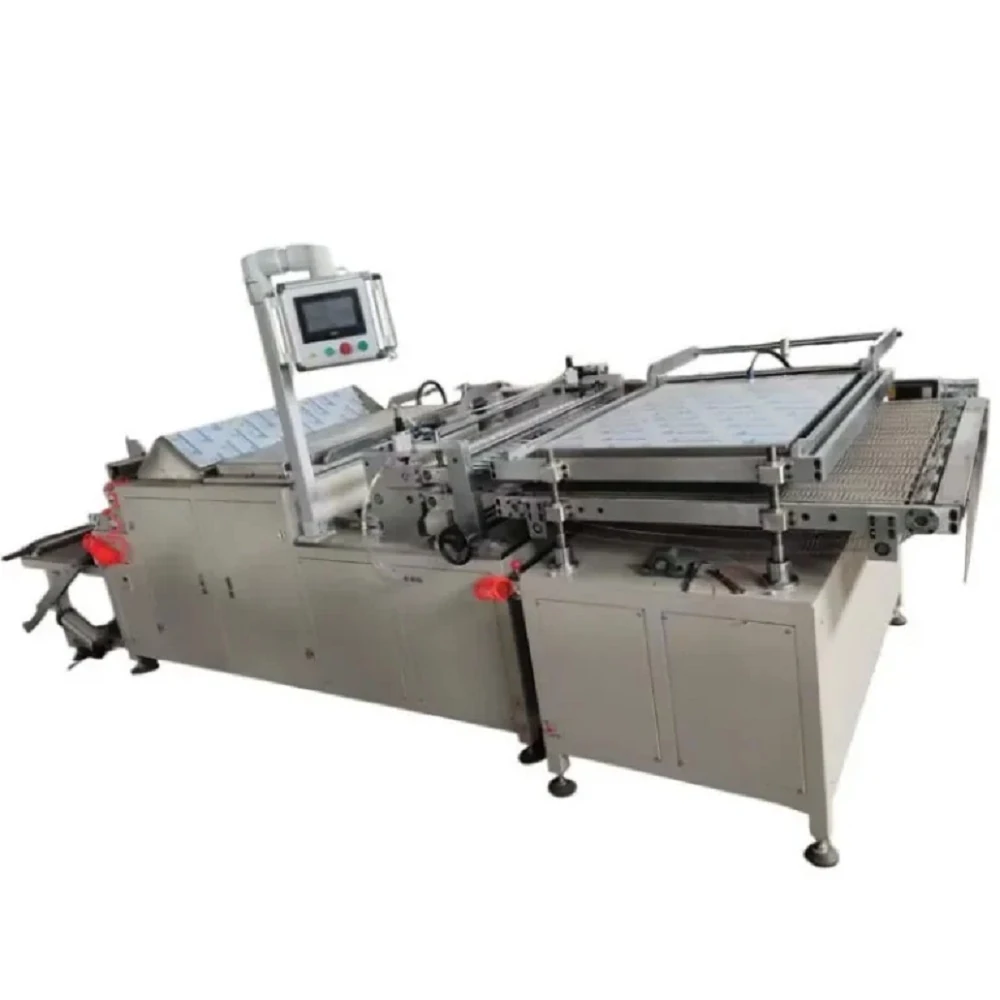
The whole sequence sits on one frame: pneumatic roll loading, pre-slitting, pre-heating, pre-humidifying, dot marking and counting, pleat collection, post-folding heating, and cooling for the final set. The web is loaded once and stays under control from unwind to collection table, so no fresh pleat is left to relax between steps.
Feed Control and a Touchscreen Staff Can Read
A high-torque servo drive keeps media moving in step with the forming rollers, which holds pleat placement steady over a long run. The touchscreen sets dot spacing and count, the temperature of each heating zone, and the recipe for each product. The interface can be supplied in Chinese and English.
Pleat Range, Machine Data and Support
Working width is 600 mm and can be customized. Pleat height runs 13–75 mm, and the four profiles — sharp, square, outward bulge, inward bulge — are configured to the height you order. The shallow end suits panel and light-duty elements; the deep end is where heavy air work sits. Line speed covers 5–70 m/min, with the working rate set by pleat height and media weight.
Every unit is run with real thick synthetic media before it leaves the workshop. Motors, wiring and heating components match the destination grid, and each machine ships with wiring diagrams, a manual and video support.
| Item | Data |
| Machine type | Rotary pleating machine for heavy air filter media |
| Working width | 600 mm, customizable |
| Pleat height | 13–75 mm |
| Line speed | 5–70 m/min; working rate set by pleat height and media weight |
| Humidification | 2 kW |
| Preheating | 4 kW |
| Post-folding heat setting | 9 kW |
| Total motor power | 20 kW |
| Pleat profiles | Sharp, square, outward bulge, inward bulge; configured to order |
| Pleat count and dot marking | Set on the touchscreen |
| Working air pressure | 0.6 MPa |
| Power supply | 380 V / 220 V, adapted to the local grid |
| Origin | Hebei, China |
| Warranty | 1 year |
| Packing | Shrink wrap first, then a wooden case |
Frequently Asked Questions
Why do tall pleats lose height a few hours after folding?
The fold was formed under force and released before the material had time to set. A tall pleat stores more energy at the root, so a pack that measures short the next morning points to too little heat, too short a cooling run, or too little dwell time.
Does humidification weaken or damage filter media?
In the right dose, moisture softens the web as it passes and leaves nothing behind. Excess is the problem: a wet web swells, spacing wanders, drying marks appear. What matters is control of the dose.
Can one machine run both cellulose paper and thick non-woven?
Within limits, yes, if the rollers and heat settings suit both. Light cellulose wants a shallow pleat and little heat; thick synthetic wants depth and a full set. Plants running both keep separate roller sets, often separate machines.
What pleat height and pitch suit a heavy-duty air filter?
Start from the housing and the dust load, not a catalog figure. Deep pleats in the 30–75 mm band cover most heavy air work. Set the pitch so pleats stay open at the working pressure drop, and let a trial on the actual media settle the last millimeters.
Conclusion
A deep pleat holds when three conditions meet. The media is soft enough to take the shape, warm enough to release its bending stress, and cool enough to keep the new geometry. None of the other settings can rescue a fold that was never set.
If you are planning a heavy air filter line, the next step is small: send the media you intend to run and the dimensions of the finished element to Fupei, and the reply will come back with a proposed pleat height, profile and line setting.