
Key Takeaways
- Check whether the production line can process the PP resin grade specified for your filter cartridges.
- Compare extrusion stability, fiber formation, winding quality, and accepted output rather than relying only on advertised capacity.
- Test finished cartridges for filtration efficiency, pressure drop, and contaminant-holding capacity.
- Ask for a production trial using your target cartridge dimensions and material before confirming the equipment configuration.
Introduction
PP melt-blown filter cartridges are used in fuel filtration and other liquid filtration applications. Their performance depends on more than the nominal micron rating. Fiber diameter, fiber distribution, cartridge density, and the consistency of the winding process all affect the final result.
When comparing melt blown machines, buyers should look beyond the equipment layout and headline production capacity. The more useful question is whether the line can repeatedly produce cartridges that meet the required dimensions and filtration performance. A practical evaluation should cover the raw material, extrusion process, fiber deposition, finished cartridge inspection, and production acceptance.
How Does a PP Melt-Blown Filter Cartridge Production Line Work?
Understanding the production process helps buyers identify which machine functions have the greatest effect on cartridge quality. A typical line melts PP resin, forms fine fibers, deposits them onto a rotating core or receiving mechanism, and produces a cylindrical filter element.
How Are PP Granules Melted and Extruded?
PP granules enter the extruder and are heated until they reach a molten state. The screw conveys and mixes the material before pushing it through the extrusion section.
The resin grade matters because different melt flow properties affect how the material moves through the screw and die. Buyers should obtain the resin supplier’s technical data sheet and check the melt flow rate, test temperature, and test load. Do not compare MFI figures without confirming that they were measured under the same conditions.
ASTM D1238 provides a method for measuring the melt flow rate of thermoplastics. The result helps assess material consistency, but it does not independently prove that a resin will produce a suitable filter cartridge.
Before selecting a line, prepare the PP resin grade and its technical data sheet. Ask the equipment supplier to confirm whether the extrusion configuration is suitable for that material. If the resin grade changes frequently, include material changeover and cleaning requirements in the evaluation.
How Are Fine Fibers Formed and Deposited?
After extrusion, molten PP passes through the fiber-forming section. Airflow draws the material into fine fibers, which are deposited onto a receiving surface.
Fiber formation affects the structure of the filter medium. If the fibers are distributed unevenly, some areas may become denser than others. This can cause differences in flow resistance and filtration performance across the cartridge.
During a production trial, inspect the fiber layer at several positions along the cartridge. Compare the surface appearance, thickness, and weight of samples taken from different production runs. If the line produces visibly inconsistent layers, ask the supplier to check the extrusion condition, airflow, and receiving speed before changing the resin.
How Is the Cylindrical Cartridge Formed and Cut?
The deposited fibers build up around a core or receiving mechanism to form a cylindrical filter element. The element is then removed, cut to length, and prepared for subsequent assembly.
The receiving process affects cartridge diameter, length, and density. Buyers should provide drawings or physical samples showing the required dimensions. During the trial, measure the finished elements at several points rather than checking only one end.
Also confirm how the line handles different cartridge lengths and diameters. If frequent size changes are expected, ask how the receiving components and cutting settings are adjusted, how long a changeover takes, and whether additional tooling is required.
Which Specifications Matter When Comparing Melt Blown Machinery?
A specification sheet is useful only when the figures relate to the buyer’s actual production requirements. The following checks help distinguish a suitable configuration from one that only looks attractive on paper.
Does the Extruder Match Your PP Resin?
Start with the resin grade, melt flow rate, and expected material consumption. Then compare these details with the extruder configuration.
Ask the supplier to identify the recommended resin range and explain whether the screw design is suitable for the material. If the supplier provides a reference production result, request the resin grade and processing conditions used in that trial.
A larger screw diameter does not automatically mean better cartridge quality. The important point is whether the extrusion section can maintain a stable material supply for the required fiber output.
Can Temperature Control Maintain Stable Extrusion?
Temperature settings affect resin melting and material flow. A suitable configuration should allow operators to monitor and adjust the heating zones during production.
During a trial, record the temperature settings after the line reaches a stable condition. Observe whether the readings remain consistent and whether the fiber output changes during continuous operation.
If the temperature fluctuates or the fibers become inconsistent, the supplier should investigate the heating system, material feeding, and extrusion condition. Do not accept a temperature range alone as proof of stable production. Ask for trial records showing the actual settings and production results.
Can the Line Produce Your Required Cartridge Sizes?
Buyers should prepare the cartridge drawing before requesting a quotation. Include the required length, outer diameter, inner diameter, weight, and any core or end-connection requirements.
Ask the supplier to confirm which dimensions can be produced with the proposed receiving and cutting configuration. If the production range includes several sizes, request a trial for the largest and smallest target dimensions. This helps reveal whether the line can maintain consistent forming quality across the required range.
Also clarify which size changes require replacement parts or manual adjustment. These details affect changeover time and production planning.
How Should Buyers Verify Daily Output and Power?
Do not compare capacity figures without checking how they were measured. A supplier may quote output under a particular cartridge size, weight, or operating condition.
Ask for the reference product dimensions, unit weight, operating hours, and whether the stated output refers to finished accepted cartridges or semi-finished elements. During a trial, count the accepted products after inspection rather than using the number of elements leaving the forming section.
For power consumption, distinguish installed power from actual operating consumption. Installed power describes the rated electrical capacity of the connected equipment. It does not show how much electricity the line uses during a normal production shift. Request the equipment power list and, where available, operating consumption records.
How Can Buyers Verify the Quality of Finished Filter Cartridges?
Machine operation alone cannot confirm finished-filter performance. Buyers need to inspect the cartridge structure and test the filtration results against the requirements of the intended application.
How Can You Identify Uneven Fiber Deposition?
Cut sample cartridges at different positions and inspect their cross-sections. Look for visible differences in layer thickness, density, and fiber distribution.
Weigh samples with the same dimensions and compare the results. Large differences may indicate inconsistent material output or receiving conditions. However, weight alone is not enough to judge filtration quality. A cartridge with a consistent weight may still have unsuitable pore structure or flow resistance.
A useful trial record should include sample dimensions, weight, appearance, and the production settings used for each sample. If the results vary, repeat the trial after the supplier adjusts the process. This shows whether the line can correct the problem and maintain consistency.
Does a Micron Setting Prove Filtration Efficiency?
No. A machine setting or stated micron range does not automatically establish the filtration efficiency of the finished cartridge.
Buyers should clarify whether a micron rating is nominal or absolute and ask how the finished element is tested. These terms should not be treated as interchangeable. A nominal rating generally indicates a stated level of particle removal under defined conditions, while an absolute rating requires a more specific performance definition and test basis.
Request test reports for the finished filter element, not just a machine parameter sheet. The report should identify the test method, test liquid, particle size, flow condition, and measured filtration result.
Which Tests Are Relevant to Diesel Fuel Filter Cartridges?
For diesel and petrol filters used in internal combustion engines, ISO 19438:2023 specifies a multi-pass filtration test using continuous contaminant injection and online particle counting. The procedure evaluates particle removal characteristics, contaminant capacity, and differential pressure under a constant test flow rate. Its stated scope covers filter elements with rated flow from 50 L/h to 800 L/h, with possible agreed modifications for higher flow rates.
This is a finished-filter performance test, not a certification for the production machine. Buyers should confirm whether the standard applies to their filter design and rated flow. If another test method is required by the customer or application, define it before the production trial.
What Should a Machine Acceptance Test Include?
A useful acceptance test should use the buyer’s intended PP resin and target cartridge dimensions. The test should run long enough to show whether the line can maintain stable production after startup.
Record the actual operating settings, production time, total output, accepted output, rejected quantity, and reasons for rejection. Inspect cartridge dimensions and weight, then send representative samples for the agreed filtration tests.
The acceptance decision should be based on measurable results. If the output is below the agreed level or the finished cartridges fail the required tests, identify the cause and repeat the trial after corrective adjustments. A successful machine demonstration should prove repeatable production, not just that the equipment can start and run.
What Does Fupei’s PP Melt-Blown Diesel Fuel Filter Cartridge Production Line Offer?
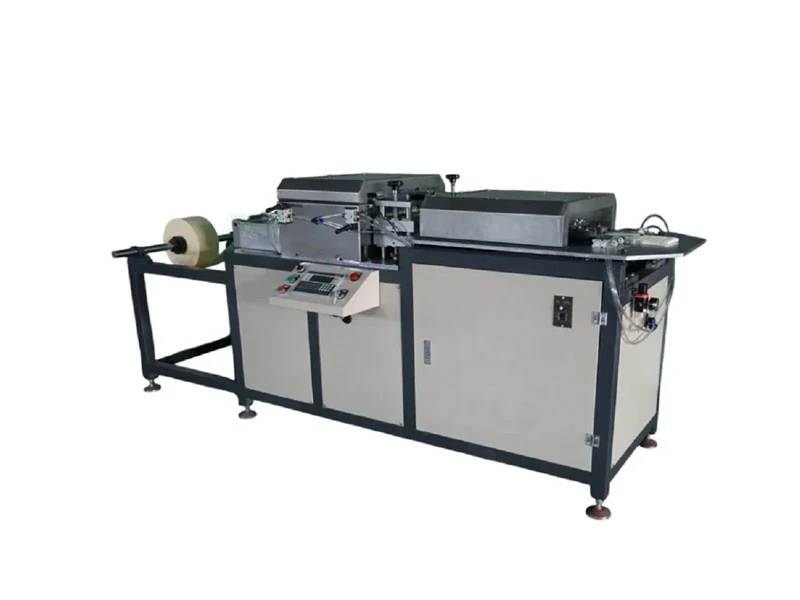
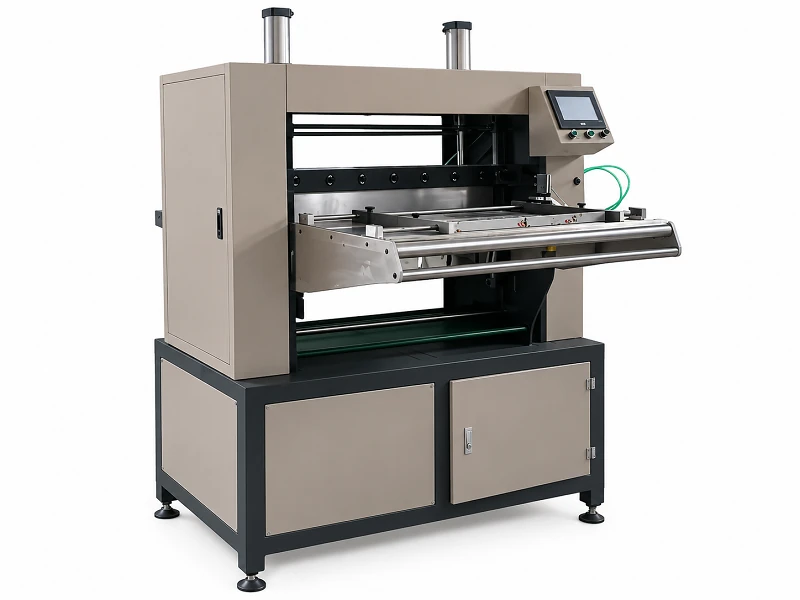
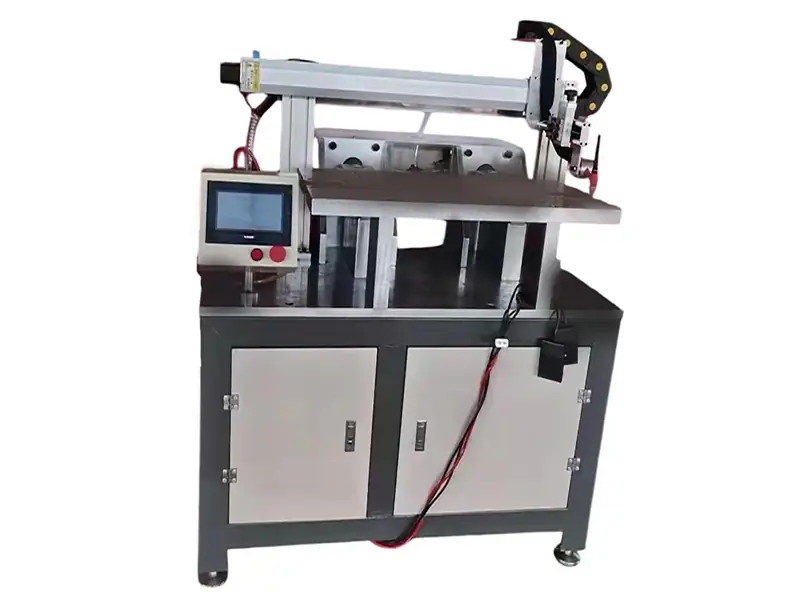
For buyers comparing filter manufacturing equipment for PP melt-blown diesel fuel filter cartridges, the published configuration from Fupei provides a reference for evaluating extrusion capacity, material compatibility, and production planning.
| Parameter | Published Specification |
| Raw Material | 100% PP granules |
| Melt Flow Index | 1200–1500 |
| Screw Diameter | Φ65 mm; Φ75 mm optional |
| Extrusion Temperature | 220–280°C |
| Daily Production Capacity | 1,500–2,500 pieces / 24 hours |
| Total Installed Power | 38 kW |
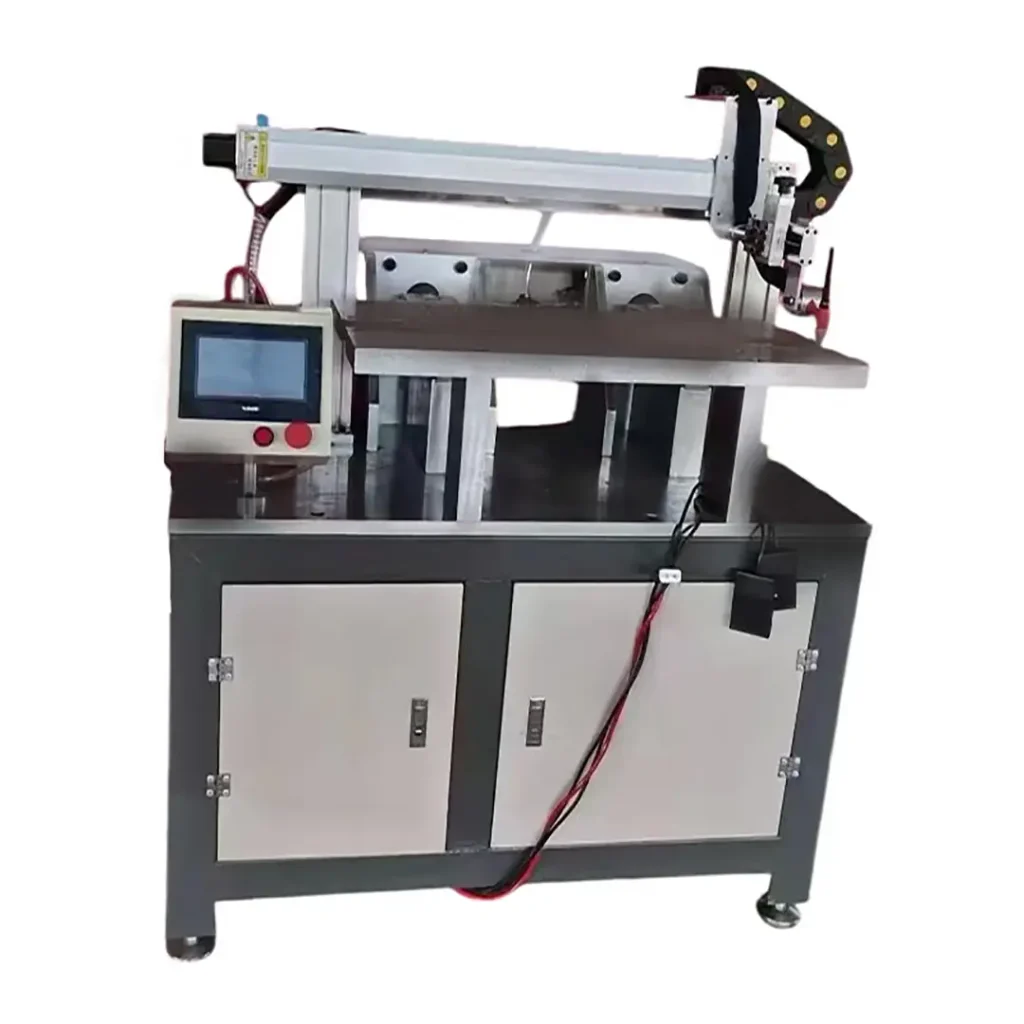
PP Extrusion Configuration for Fuel Filter Cartridge Production
The line is designed to process 100% PP granules. Its published melt flow index range is 1200–1500. Buyers should compare this range with the technical data sheet of the intended resin and confirm the test conditions used for the MFI value.
The screw diameter is Φ65 mm, with Φ75 mm available as an option. The appropriate configuration should be evaluated against the target output and cartridge requirements rather than selected by screw diameter alone.
Temperature Adjustment for the Extrusion Process
The published extrusion temperature range is 220–280°C. This gives operators a temperature range for adjusting the PP melting and extrusion process.
During commissioning, the actual settings should be established through a production trial. Buyers should check whether the selected resin can be processed consistently and whether the fiber output remains stable during continuous operation.
Rotary Receiving for Multi-Layer Fiber Deposition
The production line uses rotary receiving to build up fibers in multiple layers. This forming method is relevant to cylindrical filter elements because the receiving process affects the distribution of fibers around the cartridge.
Buyers should inspect the finished element at different positions and compare its diameter, weight, and layer consistency. These checks help determine whether the deposited structure meets the intended cartridge requirements.
PLC Touchscreen Control for Production Operation
The line is equipped with PLC touchscreen control. Operators can use the control interface to manage production settings and monitor the process.
Before purchase, buyers should ask which parameters can be adjusted through the interface and which settings require manual intervention. A clear explanation of the control functions will help operators prepare for commissioning and routine production.
Customizable Filter Element Length
The published maximum customizable filter element length is 1,000 mm. Buyers should provide their required length range and confirm the corresponding receiving and cutting arrangements.
If the factory plans to produce several cartridge lengths, it is useful to clarify the adjustment procedure and changeover requirements before ordering.
Production Capacity for Daily Planning
The published production capacity is 1,500–2,500 pieces per 24 hours. This figure should be treated as a reference rather than a guaranteed output for every cartridge specification.
Before confirming a production target, provide Fupei with the required cartridge dimensions and unit weight. Ask for a trial result based on the target product and clarify whether the quoted quantity refers to finished accepted elements.
Frequently Asked Questions
What Type of Raw Material Does Fupei’s Production Line Use?
The line is designed for 100% PP granules. Buyers should provide the resin grade and technical data sheet before confirming material compatibility.
What Is the Maximum Customizable Filter Element Length?
The published maximum customizable length is 1,000 mm. The required dimensions should be confirmed with Fupei before production.
What Is the Published Daily Production Capacity?
The published capacity is 1,500–2,500 pieces per 24 hours. Actual accepted output depends on cartridge dimensions, weight, density, material, and operating conditions.
What Does Melt Flow Index Mean?
Melt flow index indicates how much thermoplastic material flows through a specified test die under defined temperature and load conditions. It is useful for comparing resin flow characteristics, but the test conditions must match before values can be compared.
Can a Machine’s Micron Setting Confirm the Finished Filter Rating?
No. A machine setting does not replace finished-filter testing. Buyers should request test results that identify the test method and demonstrate particle removal performance under the required flow conditions.
Conclusion
A suitable production line should match the resin that the factory can source consistently, the cartridge sizes it intends to manufacture, and the quality tests required by its customers. These factors also affect material waste, changeover time, accepted output, and production cost.
Before placing an order, prepare the resin data sheet, cartridge drawings, target daily output, and filtration requirements. Use them to define the production trial and acceptance criteria. This makes it easier to compare equipment configurations on measurable results rather than headline specifications.
If you are sourcing filter machinery for PP melt-blown diesel fuel cartridges, contact Fupei with your PP resin grade and MFI, target cartridge dimensions, required daily output, factory voltage, and filtration application to discuss a suitable configuration and request a technical proposal and quotation.