
Key Takeaways
- A V-shaped fold is angled, so each pleat braces itself when liquid pushes against the pack.
- Straight pleats can bow inward as differential pressure rises, and the closed channels stop doing any filtering.
- Even pleat spacing matters as much as pleat count, because fluid always takes the easiest open path.
- Fold geometry is fixed while the paper is being folded, and no later step can rebuild it.
- Identical cut lengths and repeatable fold heights are what let end caps seal without hand correction.
Take a flat sheet of filter paper and fold it into a fan. That single change is what makes a modern filter element possible, because it packs a large working surface into a small housing. What is less obvious is that the shape of each fold decides how much of that surface survives in service.
Air and liquid do not ask the same thing of a fold. Air is thin and moves easily, while oil is heavier, thickens sharply on a cold morning, and pushes hard when a pump starts or a valve shifts. This is why oil filter machines built for liquid media form a different geometry into the paper, one that holds its shape under load rather than simply looking neat on the bench. The sections below trace that geometry from the crease to the finished element.
What a V-Shaped Pleat Actually Is
Look down on a pleated pack from above. In a straight-pleat element the folds stand like the teeth of a comb, upright and parallel to their neighbors. In a V-shaped pack, which engineers also call a herringbone or zigzag pack, every fold is tilted. The paper climbs one leg of the V and comes back down the other, so each fold meets its neighbor at an angle instead of standing square.
Three numbers describe any pleated pack. Pleat height is the depth of one fold. Pleat pitch is the distance from one crease to the next. Pleat count is how many folds fit around the element. Change any one of them and the other two move as well, which is why a fold is never a free choice.
A paper folding machine built for filter media does more than crease paper. It sets all three numbers at once, and it has to keep them identical from the first element of a shift to the last. A roll of automotive filter paper or a similar impregnated grade arrives flat and leaves folded; the crease has to form cleanly without cracking the fibers along its length.
The Three Numbers That Describe Any Fold
The depth of one fold decides how much paper goes into the element, since the media runs up one side and back down the other. A deeper fold buys more surface, yet it also spends more paper and leaves less room for the fold beside it. Pitch pulls in the opposite direction. Open the spacing and fluid moves freely, but fewer folds fit around the same circle. Tighten it and the count rises, until neighboring legs touch and the channels between them vanish.
Count is a result, not a setting anyone chooses on its own. Once the outer diameter of the element is fixed, the number of folds follows from how deep and how far apart they are. That is why two packs with identical dimensions can behave very differently once they are working.
How a V Fold Differs From a Straight Fold
A straight fold stands on a narrow crease and leans easily. Under load its two legs tend to bow toward each other, so the open channel between them narrows. A V fold is angled from the moment it is formed. The two legs brace against one another, and the fold behaves more like a small structural shape than a sheet standing upright.
The difference is mostly about where the force goes. Pressure pushing on a flat face wants to bend it, whereas an angled wall carries much of that load along its length. Anyone who has folded a sheet of cardboard into a ridge has seen the same effect: the shape, not the material, supplies most of the stiffness.
| Aspect | Straight pleat | V-shaped (herringbone) pleat |
| Fold geometry | Upright, parallel legs | Angled, self-supporting legs |
| Under rising differential pressure | Legs bow inward and channels narrow | The fold holds its angle and channels stay open |
| Flow path | Concentrates where the pack is most open | Spreads more evenly across the pack |
| Usable filter area | Shrinks as folds touch | Stays close to the designed area |
| Typical duty | Low-pressure liquid or air service | Oil, fuel and hydraulic liquid service |
What Liquid Does to a Pleated Pack
Air passes through a filter with little resistance. Oil does not. It is far more viscous, it grows thicker when cold, and a pump can raise the pressure across the media in a fraction of a second. Each of those conditions adds load to the folds.
The load comes from a difference in pressure rather than an absolute figure. Fluid arrives on the dirty side at one pressure and leaves on the clean side at a lower one; the gap between the two is what the pack has to carry. As the media collects particles, that gap grows, because the same flow has fewer open paths to take.
Why Pressure Builds Across the Media
Cold starts are the hardest moment. Thick oil cannot pass through the pores quickly, so the upstream side climbs while the downstream side waits. A valve that shifts suddenly does something similar, sending a short pressure spike through the housing. Neither event lasts long, yet both arrive before anyone can react.
Dirt loading works more slowly and in the same direction. As particles collect, the open paths narrow and the pressure difference rises. A pack that was comfortable when new may spend the last part of its life close to its structural limit, so designers look at the whole service interval instead of only the first hour.
What Pleat Collapse Looks Like in a Finished Element
Collapse rarely means the media tears. More often the folds simply lean and close. Neighboring legs touch, fluid can no longer reach the paper deep inside those channels, and part of the media stops working even though it is still physically there.
The signs are easy to read once the element is opened. Folds may be pressed tightly toward the center tube. Some channels look squeezed while others remain wide. A hydraulic oil filter removed from construction machinery after a cold winter often shows this most clearly, since the oil is thick and the pressure cycles come often.
For a producer, the useful question is where the problem began. A fold that closes in service was usually a fold that had too little support when it was made, and no downstream station can reopen it.
How Fold Geometry Decides Whether a Pack Survives
Three things are settled while the paper is being folded: the angle of each V, the distance between folds, and the length of the sheet that becomes one element. Everything afterwards — trimming, bonding, end caps, curing — works with the geometry it is given.
A self-supporting angle comes first. When the two legs of a fold brace each other, the pack resists the pressure difference without needing to be held open from outside. A pack built from upright folds depends far more on the support tube and on the adhesive.
Spacing comes second, because uniform pitch keeps the resistance even across the whole pack. Fluid then spreads instead of hunting for the easiest route. Cut length comes third. If one sheet is slightly longer than the next, the finished pack carries a different number of folds, and the filtration area changes from one element to the next.
Why Even Pleat Spacing Matters More Than Pleat Count
Buyers often ask how many folds an element has. A more useful question is whether every gap is the same size. Fluid follows the path of least resistance, so one wide channel carries more than its share while the tight channels beside it do almost nothing. The pack then loads unevenly and reaches its limit early, even though the fold count looks impressive on paper.
Even spacing also decides how the pack sits inside its housing. When the gaps repeat, the pack keeps a predictable diameter and closes into a round element without being forced. When they drift, the last folds have to be compressed before the ends meet.
Where End Caps Depend on the Fold
An end cap seals against the edge of the pleated pack. That edge is a row of fold tips, and it seals well only when every tip sits at the same height and the same distance from its neighbor. A shallow fold leaves a gap, while a tall one is crushed as the cap is pressed on.
This is why cut length and pleat height belong together. A sheet cut to an identical length produces the same number of folds every time, and a gear-driven fold keeps each one at the same pitch. Operators then get a pack edge that a cap can seal without hand correction. Buyers get the same filtration area in every batch, which is what they are really ordering.
Four faults that begin at the folding stage show up later as a weak element:
- Pleat height drifting across the roll, so one side of the pack seals and the other does not.
- Pitch wandering as the roll diameter shrinks, which changes the number of folds per element.
- Soft or rounded fold tips that leave the pack edge uneven.
- Sheets cut to slightly different lengths, so finished elements no longer match.
Where V-Pleated Liquid Elements Are Used
Liquid filter cartridges built this way appear wherever a liquid has to stay clean under pressure. Automotive oil filters are the most familiar example: a pleated paper core sits inside a metal can and has to hold its shape through cold starts, long service intervals and repeated pressure cycles.
Fuel and diesel cartridges use the same geometry for a different fluid, where water and fine particles are the main concern. Hydraulic elements in construction and agricultural machinery face the widest pressure swings of all, so fold stability matters more there than raw filter area. Industrial liquid separation elements cover the remaining ground, from lubrication circuits to process fluids.
What links these products is not the fluid but the working condition. Each runs with a liquid on one side of the media, a pressure difference across it, and no chance to straighten a fold once the housing is closed.
A V-Shaped Pleating Machine Built for Liquid Filter Media
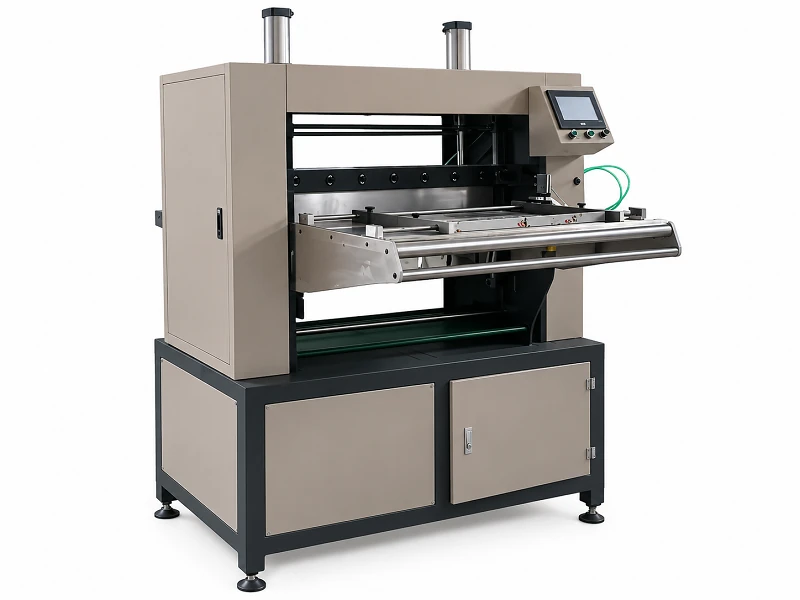
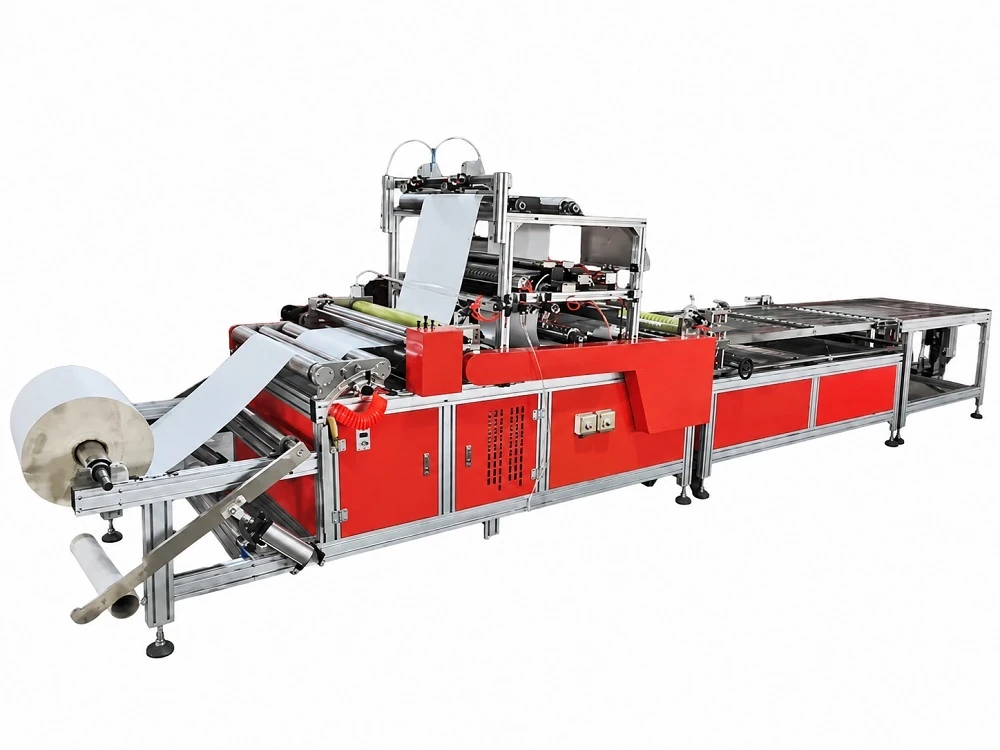
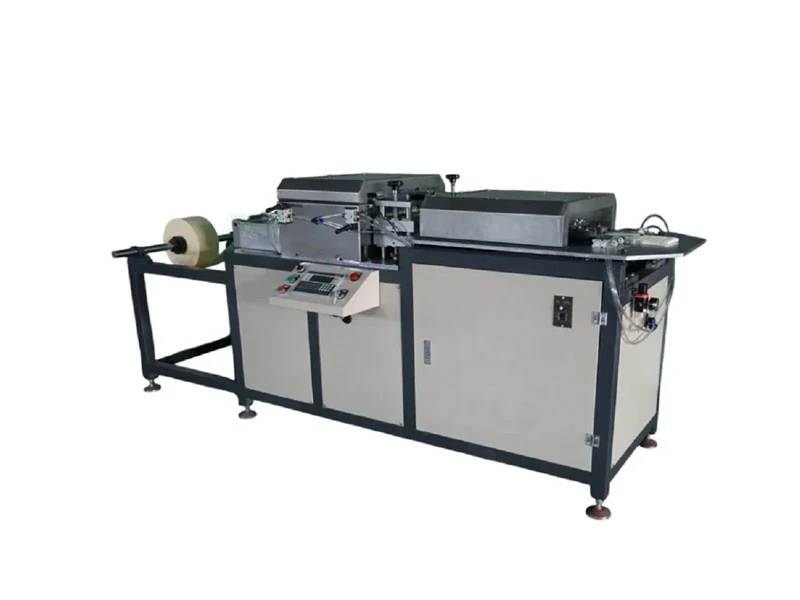
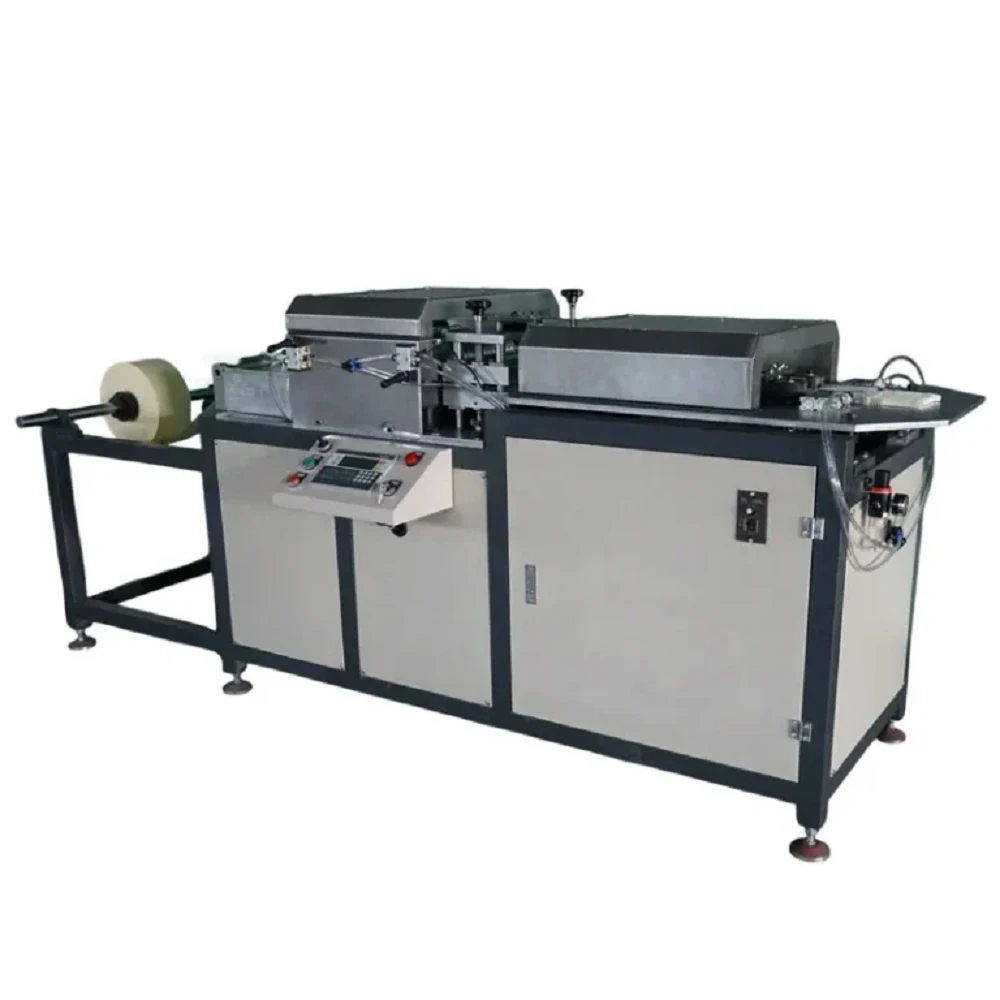
Fupei builds a V-shaped pleating machine for oil filter elements that follows the logic above. It is a single machine for liquid filter paper, and each part of it answers one of the three things a fold has to get right.
Servo Feeding and Fixed-Length Cutting
A high-torque servo feeder advances the media to a preset length before a fixed-length cutting unit separates the sheet. Because the feed is servo-controlled rather than mechanically linked, every sheet enters the forming section at the same dimension. That gives each element an identical pleat count and removes the slow length drift that appears across a long run. Operators do not need to measure between orders.
A Forming Section Built Around the V Fold
The herringbone forming section shapes each sheet into a self-supporting V at 12–28 mm pleat height on a 400 mm working width. A hardened gear and gearbox transmission drives the folding action, so pleat pitch stays constant from the first fold to the last. Pleat height, feed length and running parameters are set on a touchscreen and executed by an SJ PLC. Switching from one oil filter model to a fuel or hydraulic element happens in the interface, which shortens changeover and takes operator judgment out of the setup.
Parameters and Support for Production Planning
| Item | Figure |
| Folding height | 12–28 mm |
| Working width | 400 mm |
| Output | 5–10 pcs/min |
| Motor power | 2.6 kW |
| Working air pressure | 0.5 MPa |
| Power supply | 380 V / 220 V |
| Control | SJ PLC with touchscreen |
| Core components | Gear, gearbox, PLC |
| Application | Oil, fuel and hydraulic filter elements |
| Warranty | One year |
Working width, pleat height range and voltage can be configured to suit a local power supply and the space available on the floor. Each machine ships with a one-year warranty, complete wiring diagrams and life-long remote video troubleshooting, while installation and operator training can be arranged on site. Sample media can be reviewed before an order, and a technical reply normally arrives within 48 hours.
Frequently Asked Questions
Why use a V-shaped pleat instead of a straight pleat for oil filters?
A straight fold stands upright and tends to bow inward when the pressure difference across the media rises. Once neighboring legs touch, the channels between them close and part of the media stops working. A V fold is angled and self-supporting, so it keeps those channels open through cold starts, pressure spikes and normal dirt loading.
What filter media can a V-shaped pleating machine handle?
These machines are built for liquid filter media, which covers the impregnated paper grades used in oil and fuel elements as well as the heavier grades used in hydraulic elements. The exact grade should be confirmed with a trial fold, because stiffness and thickness decide how cleanly a crease forms.
What pleat height and working width suit liquid filter elements?
The right values come from the drawing of the finished element rather than from a catalog. Start with the outer diameter and the media area the element needs, then work back to fold height and pitch. A supplier should confirm both on a sample of the actual paper before the machine is configured.
How is pleat height controlled on the machine?
On a modern machine the value is entered on a touchscreen and executed by a PLC, which sets the feed length and the forming position together. Simpler designs still rely on mechanical adjustment, but that asks more of the operator and takes longer whenever orders change.
Can one machine run oil, fuel and hydraulic elements?
Yes, as long as the fold range and the working width cover all three. The media changes most between them, so settings and, where needed, forming tools should be matched to the grade in use. A plant running very different paper weights usually keeps a separate setting for each product family.
Conclusion
Liquid service asks a fold to hold its shape under a load that air filters never see. The V shape answers that with an angled, self-supporting geometry, while even spacing and an identical cut length keep the whole pack working together. Get those three right at the pleating stage, and the later steps have something reliable to build on.
Pleat height, pitch and cut length come from the element being built, not from the fastest setting on a machine. Reading the finished drawing first and then confirming the fold on real paper is still the shortest route to a pack that survives its full service interval. Send a roll of the media you run and the dimensions of your finished element, and the team can recommend a pleat height, working width and line setting for a trial fold.